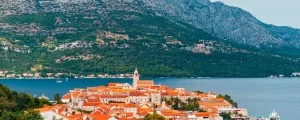
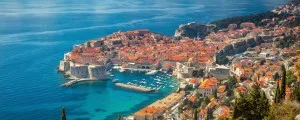
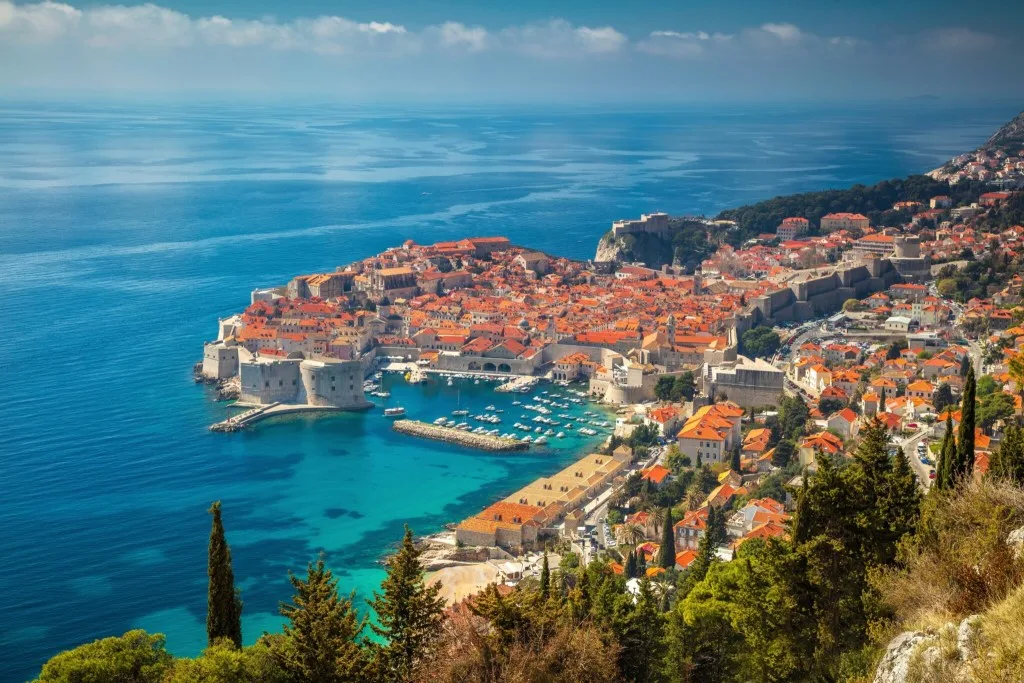
“Korčula is the small Dubrovnik with a harbour of its own: a walled town on a peninsula, Grk and Pošip in the cellars, and the Pelješac channel to sail across.”
Korčula is the island halfway between Split and Dubrovnik, and Korčula Town is the reason yachts stop: a medieval town on an oval peninsula, ringed by its own walls, with the marina at its foot. Captains call it the small Dubrovnik, and one of the stewardesses we interviewed at the Split show in 2024 named it her most beloved place in Croatia: her guests are amazed by it, and the wine tasting is outdoors among the vineyards.
The rest of the island is long, green and quiet: Lumbarda and its sandy beaches at the east end, Vela Luka in a deep bay at the west, the Škoji islets and Badija for the swim stops, and inland villages that grow the island’s two white grapes, Grk and Pošip. Across the channel is the Pelješac peninsula, Croatia’s red-wine country, and the Maestral that blows through it every summer afternoon.
It is day four of our Split to Dubrovnik week, the turnaround of our Split round trip, day three of the Trogir loop, and third in our six islands for a first Croatia week as the culture-and-dinner stop.
Must-dos on Korčula
- Korčula Town from the water, then the walk through the walls to St Mark’s and the Marco Polo house
- A cocktail in Massimo’s tower, hauled up by pulley to the roof of a medieval bastion
- Grk and Pošip in Lumbarda, tasted at the vineyard that grows them
- Badija and the Škoji islets, the swim stop before or after the town
- The Pelješac channel under sail, with the kiteboarders off Viganj in the afternoon Maestral
Korčula Town and Badija: the walled peninsula


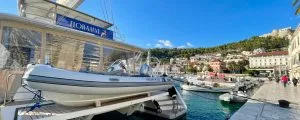
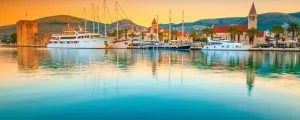
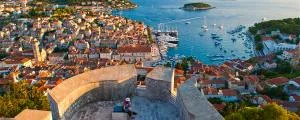
Korčula Town is the arrival. From the sea it is a walled oval on a stub of peninsula, the cathedral tower in the middle and the ACI marina tucked in on the east side; yachts dock inside the walls or stern-to on the town quay, and the old town starts at the gangway. The streets are laid out in a herringbone off one central spine so the summer breeze gets in and the winter bora does not.
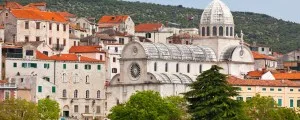
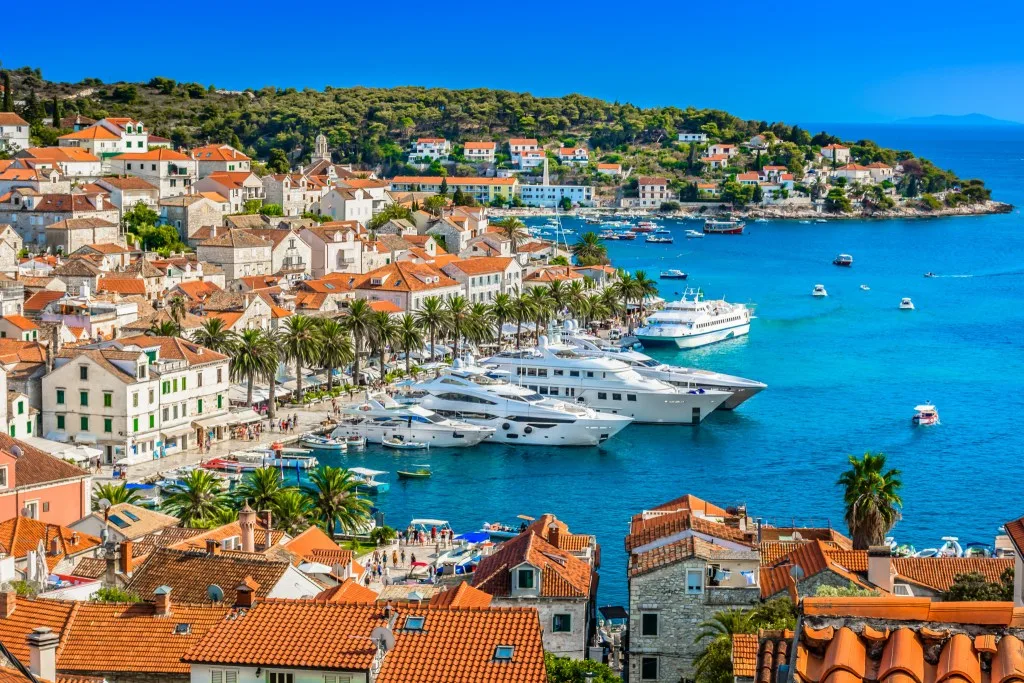
What to do with an evening: the cathedral of St Mark and the square in front of it, the stone house the town says was Marco Polo’s birthplace, the Moreška sword dance if it is on, and a drink at Massimo’s, a cocktail bar on top of a corner tower in the walls where the drinks come up by pulley. For dinner, LD in the old town has a Michelin star, Filippi is on the waterfront, and the cellars in the lanes pour the island’s own Grk and Pošip by the glass.
The marina fills in July and August; our captains book it ahead or anchor off Badija and tender in, which is a five-minute run and a better view of the walls at night.
Marina, anchor or lunch stop: the night at Korčula
- ACI Marina Korčula: inside the town, the night for the group that wants dinner ashore and the walk home along the walls.
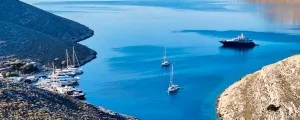
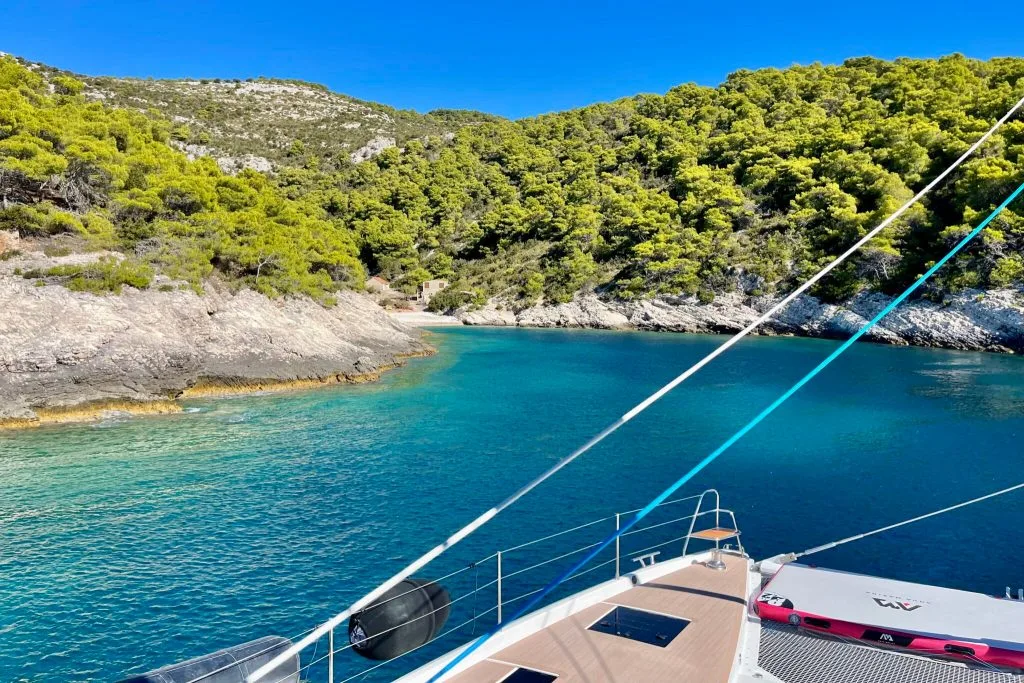
- At anchor off Badija: the monastery island across the channel, a swim before dinner and the town lights across the water; tender in.
- Lunch stop only: boats running Hvar to Mljet in a day tie up for two hours and move on; the town works at any length.
Lumbarda, the Škoji islets and Žrnovo: the east end


Lumbarda is four miles east of the town, a village of vineyards on sandy soil, the soil Grk is native to and grows in few other places: the vine has only female flowers and needs Pošip planted beside it to fruit, so every Grk vineyard is a mixed one. The tastings are at the family wineries in the village, a short taxi or bike ride from the quay, and the beaches, Pržina and Bilin Žal, are sand rather than pebble.
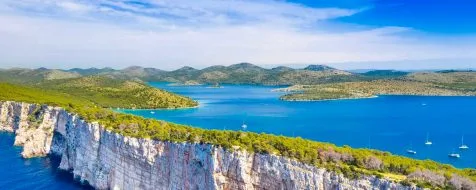
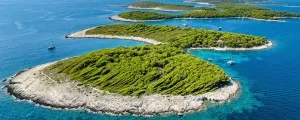
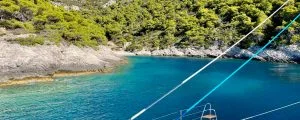
Off Lumbarda and the town lie the Škoji, a scatter of pine-covered islets with Badija the largest: a Franciscan monastery from the fifteenth century, tame deer, and a ring of swimming coves. Our Trogir loop uses Badija as the swim stop between Korčula Town and Lastovo, and it is the anchorage of choice when the marina is full. Žrnovo, in the hills behind the town, is the village for handmade macaroni and Konoba Maha’s farm dinners; Pupnat, further west, has Konoba Mate and the bay below it for a quiet lunch on the hook.
Vela Luka, Proizd and the south coast: the west end
Vela Luka sits at the head of a long, deep bay at the western end, twenty-five miles from the town by road and further by sea, and it is the island’s working port: a fishing harbour with room for larger yachts, a klapa singing tradition, and the islet of Proizd off its mouth, whose white-pebble coves our Split-to-Dubrovnik route lists among the region’s best beaches. None of our published routes reach it; a boat coming up from Lastovo or heading to Vis passes the west cape and can stop for lunch at Proizd on the way.
The south coast between the two ends is cliffs and a few coves, Pupnatska Luka among them, and a captain uses it in settled weather when the group wants an empty bay after a town night.
The Pelješac channel, Viganj and Orebić: across the water
The channel between Korčula’s north-east tip and the Pelješac peninsula is the sailing water of the island. The Maestral, the north-westerly that builds every summer afternoon, funnels through it, and Viganj on the Pelješac side is a regular spot for windsurfers and kiteboarders, as our Trogir loop notes on the way through. Orebić, across from Korčula Town, is the ferry village under the mountain, with the Franciscan monastery above it for the view back over the channel.
Pelješac itself is red-wine country, Plavac Mali on the steep Dingač and Postup slopes above the sea, and a group that has done Korčula’s whites can tender across for the reds. Our food guide covers what each island pours.
Fitting Korčula into the week
Korčula is the pivot of a south-going week. It is where our Split round trip turns for home, and the day-four stop on the way to Dubrovnik; from Trogir it is day three. Passages as our routes run them:
- Vis to Korčula Town: about 44 nautical miles, four and a half hours at motor-yacht pace, the long day of the Split to Dubrovnik week, past Sušac and Lastovo.
- Šćedro or Hvar to Korčula: about 22 nautical miles east along the channel, two hours.
- Korčula to Lastovo: about 30 nautical miles south-west, three hours, for the dark-sky night.
- Korčula to Mljet: about 20 nautical miles, two hours, the next stop south; Mljet to Dubrovnik is the last leg.
The town is small enough that one night covers it; two nights only if the group wants a Pelješac wine day or the Lumbarda beaches without moving the boat.
People also ask about Korčula
Is Korčula worth visiting on a yacht charter?
Yes, and it is on every south-going route we publish. Korčula Town is the culture-and-dinner stop of a Croatia week: a walled medieval town you dock inside, its own white wines, and swim stops at Badija and the Škoji islets five minutes away.
Where do yachts dock or anchor at Korčula?
ACI Marina Korčula, inside the town walls, booked ahead in July and August; or at anchor off Badija across the channel, with a five-minute tender to the town quay. Lumbarda has moorings by the sandy beaches, and Vela Luka a deep harbour at the west end.
How far is Korčula from Hvar, Vis and Dubrovnik?
About 22 nautical miles from Hvar or Šćedro, two hours; about 44 from Vis via Lastovo, four and a half hours; about 20 to Mljet and roughly 55 on to Dubrovnik, which is why Mljet is the stop in between.
What is Korčula known for?
Its walled old town, nicknamed the small Dubrovnik and said to be Marco Polo’s birthplace; the Moreška sword dance; and two white grapes of its own, Grk from Lumbarda’s sandy soil and Pošip.
Is Korčula less crowded than Hvar?
Yes. Hvar is the party town and Korčula is the dinner town: the same stone and the same sea, a quieter quay, and the evening ends with a walk on the walls rather than a club. Our six-islands guide ranks it third for exactly that.
Can we do a wine tasting from the yacht?
Yes. Grk and Pošip at the family wineries in Lumbarda, a short ride from the quay, or Plavac Mali on the Pelješac slopes across the channel by tender. The crew arranges it the day before.








 iMessage
 WhatsApp