A crewed week in Croatia runs on a rhythm the crew set. You board in the afternoon, the captain briefs you, and most days take the same shape: a short cruise, a swim stop, a long lunch, and a night at anchor or on a town quay.
Your only real job is to say what you want. This is what the week itself is like, not where to go. For the route, start with our Croatia yacht charter itineraries. If you have not booked yet, how booking a first charter works covers the half before this one.
Boarding day
Boarding is an afternoon event and disembarkation a morning one. The exact hours are in your charter agreement, not in any national rule. The gap is there because the yacht is cleaned, provisioned and checked between two sets of guests on the same day.
Yachts sell the summer in weekly blocks, most Saturday to Saturday, so the whole coast changes guests at once. A late flight rarely costs you the charter, but it does cost the first evening. Arrive the day before if you can: here are hotels in Split for the night before.
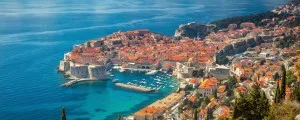
Most weeks leave from Split, Trogir or Marina Kastela by the airport, some from Dubrovnik, where the marina sits at Komolac about 8 km outside the Old Town. See whether to start in Split or Dubrovnik.
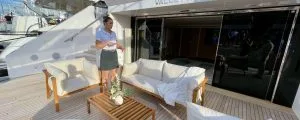
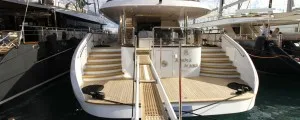
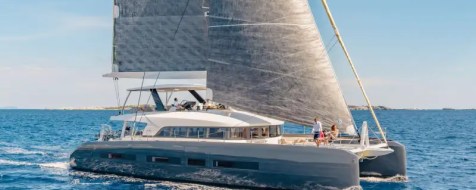
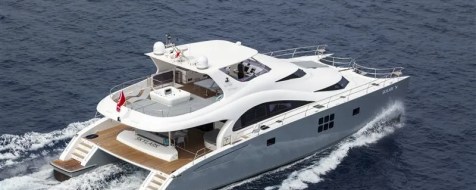
The first hour is simple. Bags below, the safety briefing, then everyone sits down over the week ahead. On our own charter aboard the catamaran FLORAMYE, that started with cold drinks on deck and a tour of the yacht.

The first evening
Night one rarely goes far. An hour of cruising, the anchor down in a bay before dark, and dinner on deck while the captain works out the week around the forecast he now has and the group he has now met.
The other version is a berth in town, where the yacht ties up along the promenade and you step off into the square. Arrive early in a popular harbor and you get the better spot.
The one thing worth settling before you fly is who takes which cabin. Many yachts have one that is clearly the best, though some Croatian catamarans have four equal cabins, which ends the conversation before it starts. By the second night nobody remembers it mattered.
From coffee to the last swim
There is no schedule you have to keep. You wake when you wake, and coffee is already on, because someone in the crew has been up a while.
Breakfast comes at the time you set the night before. Nine, ten, later for whoever slept in. Nobody is waiting on you and nobody is hurrying you.
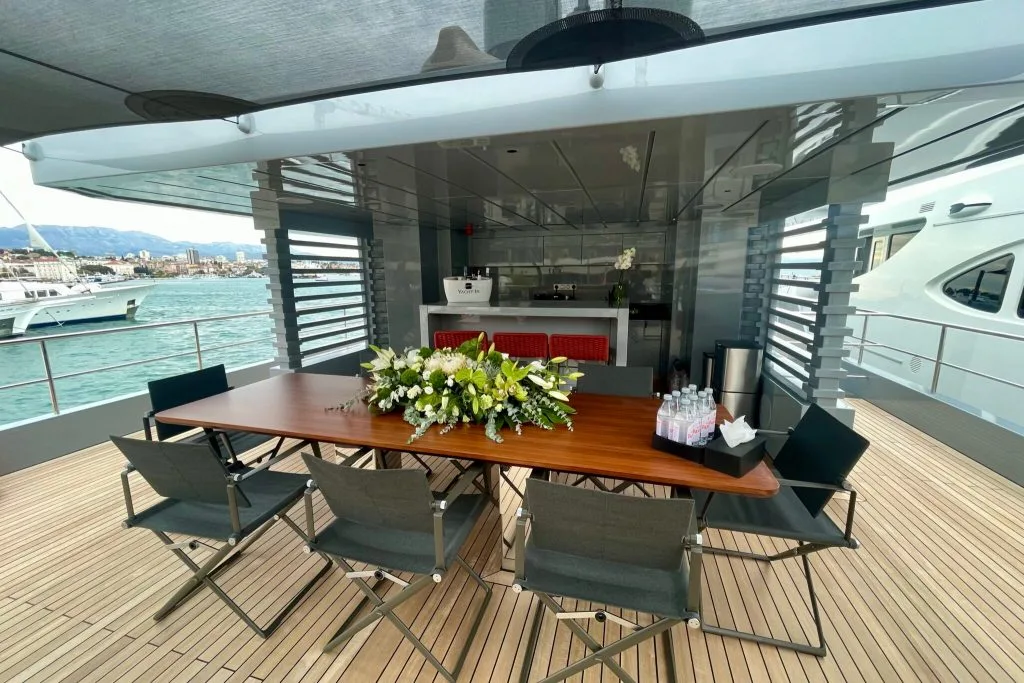
Then the yacht usually moves. Some days lunch happens underway with the coast going past, some days the anchor goes down first and you eat on deck with the swim ladder in the water. The channels between the islands are sheltered, so this is the part of the day you feel and the night you do not.
The afternoon is yours. Move again or stay where you are, and most groups stay. The toys come off the swim platform, someone takes the tender in for a walk through the village and a drink on the square, and the rest of it disappears into the water.
By early evening you are anchored somewhere quiet or tied up along a promenade, and tomorrow starts the same way. Croatian distances keep it that easy: Korcula to Vis, one of the longer hops, is about 4 hours.


Food and drink
What the galley covers depends on the crew, so confirm it before you book. A dedicated chef cooks all three meals. On many mid-size Croatian boats a cook or cook stewardess runs the galley, which means breakfast plus one main meal, and the other eaten ashore.
On a two-crew yacht that is the design rather than a shortfall, and it is a large part of why the week feels sociable. Eating well on a Croatia yacht charter covers chefs, konobas and the gulet drinks package.
One meal needs planning: peka, lamb or octopus cooked for hours under an iron bell heaped with embers. Good konobas need it ordered hours ahead, so you decide at breakfast and the crew calls it in while you are still swimming.


Going ashore
You do not have to be in a port to go into town. Every crewed yacht carries a tender and the crew run it whenever you ask, at eleven in the morning or at six in the evening. The islands sit close enough together to eat in a different harbor every night.
Getting on and off is easy on the larger yachts. Alongside in a town they put out a wide gangway that suits small children and grandparents alike, which matters more on a multi-generation week than anything on the spec sheet.
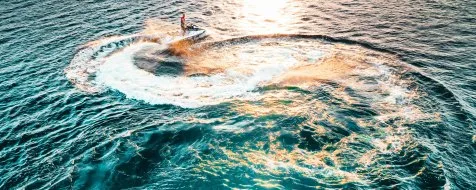
Say at breakfast what you want in the water that afternoon. Rigging the toys can take the deck crew an hour, and they would rather do it once. Jet skis are the exception: Croatian law normally requires a valid license and an operator over 18, and not every foreign license is accepted. The detail is in jet ski rules in Croatia.


Anchor nights and town nights
A week usually mixes both and the mix is yours to ask for. Some groups want every night in a bay, some want a village every night, most alternate. Say early which way you lean.
Swapping a town night for a quiet bay is easy. The reverse, in a popular harbor in August, may not be. Bring two or three places you really want to see and let the captain build the rest around the weather.
He has the final say on safety, sea state and local rules, and in Croatia bad weather changes the plan far more often than it cancels the charter. The wind you will hear named is the bura, a northeasterly off the mountains that the national weather service calls gusty, fast and long-lasting. It is a cold-season wind, so a summer week is far more likely to meet the afternoon northwesterly, the maestral.
Money during the week
Most of the money moves before you arrive. Final payment and the APA are usually due 30 to 60 days out. The APA is not payment though: it is a float held against what the week actually spends, defined along with every other term in our yacht charter glossary.
- VAT. 13 percent in Croatia, one of the lower rates in the Mediterranean, charged on the base fee and not on the APA.
- The APA. Usually 25 to 40 percent of the base fee, higher on motor yachts and lower on sailing yachts. It covers food, drinks, fuel and port fees. Ask for the running total any day; anything unused comes back.
- Port and mooring fees. A bay night usually beats a summer town quay, but many of the best bays are paid mooring buoys and national park days are ticketed. The crew books it all through the APA. Figures in Croatia’s national parks by yacht.
- The one-way. Ending somewhere other than where you started carries a repositioning cost. See why a Split to Dubrovnik one-way costs extra.
Tipping is always your decision. The MYBA agreement your captain signs does not require one and nobody will ask. Mediterranean custom is 5 to 15 percent of the base fee, and Croatia sits toward the lower end. It goes to the captain at the end of the week, once the APA statement is settled, and crewed yacht charter etiquette covers the rest of the unwritten rules.
The whole budget picture is in what a Croatia charter really costs.
The last morning
Disembarkation is a morning event and a slow one. You can wake up in a bay, have breakfast, pack at your own speed and cruise in from there. In practice the last afternoon is a swim and a short hop to the base, with the final night alongside.
Do not book a departure before late morning, and avoid a tight connection. There are bags, an APA statement, and if you finish in Dubrovnik the drive in from Komolac. One thing to settle before you sign: a one-way week can end on Friday instead of Saturday, and not every fleet does it that way.
If anything is not right, say it while you are still on the water. During the charter we can change almost anything. After you step off, almost nothing.
What first-timers get wrong
- Planning the route before meeting the weather. Bring two or three places you want to see, not a timetable. The captain shapes the week once he has the forecast, and that is where the best days come from.
- Assuming every yacht has a chef. Check the crew list before you book. Two crew usually means a light breakfast and one simple meal, with dinner ashore.
- Not asking when the yacht moves. Ask at breakfast what the day looks like, so the swimmers and the runners in your group can plan around it.
- Booking the flight home too early. The last morning carries bags, a settlement and sometimes a drive to the airport.
For the travel half of boarding day, our guide to airports, marinas and boarding day in Croatia covers which airport serves your marina and how early to arrive.
Ask us before you fly
If you are weighing a week and want to know what your yacht would actually be like, tell us what you have in mind and we will talk it through.
People also ask
What time can we board a yacht charter in Croatia?
Boarding is an afternoon event and disembarkation a morning one, but the exact hours are a term in your charter agreement rather than a national rule, so check the contract. Most Croatian charter weeks run Saturday to Saturday.
What do we wear on a crewed yacht charter in Croatia?
Swimwear and light clothes by day, and something a little smarter for dinner ashore. Shoes usually come off at the passerelle, so pack soft soles you can slip off. There is more on this in what sharing a yacht with crew is actually like.
What paperwork do we need before boarding?
One item: passport details for everyone on board, sent weeks ahead with your preference sheet. Send them the day they are asked for, because a missing detail can cost two hours at the dock, and bring the passports themselves. The charter company files the crew and passenger list with the state, so there is no harbor office queue for you. There is often no captain’s call beforehand and that is not a bad sign: questions go through your broker, and crews usually open a WhatsApp group in the final weeks.
Do we have to tip the crew?
No. A tip is always at your discretion, the MYBA charter agreement your captain signs does not require one, and nobody will ask you for it. The Mediterranean custom is 5 to 15 percent of the base charter fee, and in Croatia it is common to tip toward the lower end.
What do we do while the yacht is moving?
Whatever you like. Most travel days involve 1 to 3 hours of cruising, split into one or two short moves, so guests read, sit on the foredeck, nap or watch the coast. The channels between the islands and the mainland are sheltered, so the water is usually calm.
Can we change the route once we are on board?
Yes. The captain will work around what you want, though on safety, weather, sea conditions or local rules the captain’s decision is final. Swapping a town night for a quiet bay is easy. The reverse, in a popular harbor in August, may not be.







 iMessage
 WhatsApp